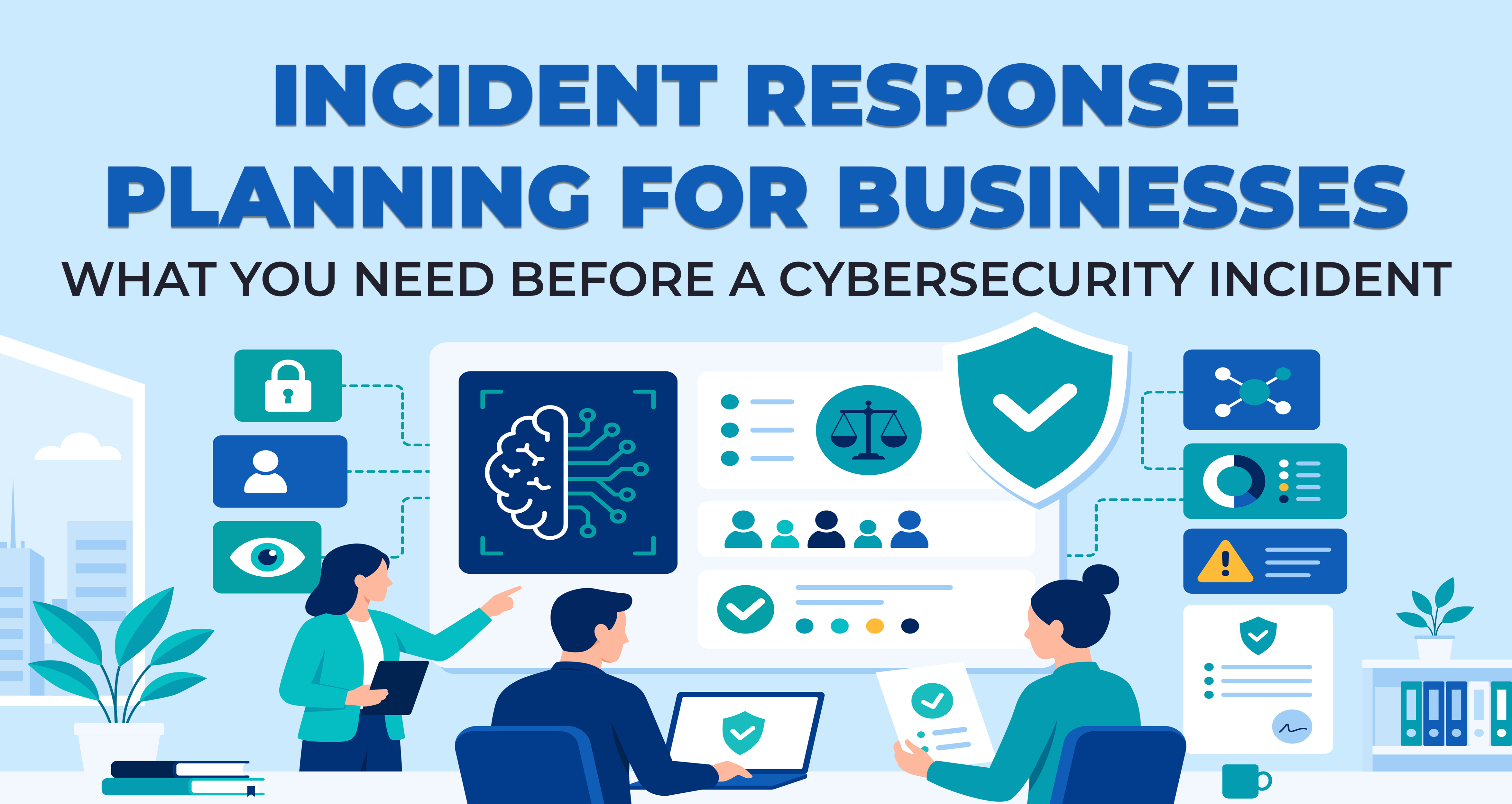
 Most business owners have fire extinguishers in their offices. Not because they expect a fire tomorrow. Because if a fire does happen, it's too late to start planning.
The same principle applies to cybersecurity and technology disruptions.
Whether it's a ransomware attack, a compromised email account, a hardware failure, or an employee who accidentally clicks the wrong link, every business faces some level of technology risk. The organizations that recover quickly are rarely the ones with the biggest IT budgets. They're the ones that prepared in advance.
That's where an incident response plan comes in.
An incident response plan isn't about expecting disaster. It's about ensuring your business can respond quickly, minimize disruption, and return to normal operations when something unexpected occurs.
What Is an Incident Response Plan?
An incident response plan is a documented strategy that outlines what happens when a cybersecurity or technology incident occurs.
Instead of making decisions in the middle of a crisis, your team follows a predefined process. The goal is simple:
Without a plan, even a small incident can create unnecessary downtime and frustration.
The Cost of Making It Up as You Go
When an organization experiences a significant technology issue, panic often becomes the biggest obstacle. Questions start flying:
If these questions haven't been answered ahead of time, valuable time is lost.
The longer decisions take, the greater the impact on productivity, customer service, and day-to-day operations.
A well-designed response plan eliminates guesswork when every minute counts.
What Every Business Response Plan Should Include
An incident response plan doesn't have to be lengthy or overly technical. It does need to clearly define a few critical areas.
 Roles and Responsibilities
Everyone involved should understand their role. This may include:
The most successful response efforts happen when responsibilities are established before an incident occurs.
Communication Procedures
Clear communication helps prevent confusion and misinformation. Your plan should identify:
Consistency matters, especially during high-pressure situations.
Recovery Priorities
Not every system has the same level of importance. Determine ahead of time:
Knowing these priorities allows recovery efforts to focus on what matters most.
Backup and Recovery Verification
Many businesses assume their backups are working. That's a dangerous assumption. Backups should be:
A backup is only valuable if it can actually restore your business operations when needed.
Why Proactive Preparation Beats Reactive Recovery
One of the biggest misconceptions about cybersecurity is that protection alone is enough. Security tools are important.
But no technology solution can guarantee that an incident will never occur. What separates resilient organizations from vulnerable ones is preparation. Proactive businesses:
These activities reduce both the likelihood and impact of unexpected events.
Accountability Is Often the Missing Piece
Many organizations discover a major problem during an incident: nobody truly owns the outcome. Some vendors focus only on their specific products. Others simply point to another provider when issues arise. That's not effective incident management.
Businesses need technology partners who take ownership of problems from start to finish. A strong managed services provider helps by:
Technology support shouldn't end when a problem is identified. That's when support matters most.
Incident Response Is Really Business Continuity
At its core, incident response isn't just about cybersecurity. It's about protecting your ability to operate. Your customers don't care whether an outage was caused by a cyberattack, hardware failure, software error, or accidental mistake. They care whether your business can continue serving them effectively.
Preparation allows you to maintain confidence, productivity, and operational stability when challenges arise. The organizations that recover fastest aren't necessarily the lucky ones.
They're the prepared ones.
Every business will face unexpected technology challenges at some point. The real question isn't whether something will happen. It's whether your organization will be ready when it does.
A clear incident response plan provides structure, accountability, and confidence during uncertain situations. More importantly, it helps protect your people, your customers, and your ability to stay productive when it matters most.
Wondering whether your business is prepared for a cybersecurity or technology incident? EnvisionIT Solutions in New Mexico and Colorado can help you evaluate your current readiness, identify gaps, and develop a practical response strategy that minimizes disruption and keeps your organization moving forward.